
Moving in Winter Toronto: Complete Safety Guide 2026
Winter moves in Toronto cost 15-25% less than summer, but snow, ice, and cold create unique challenges. Here's how to move safely from November through March.
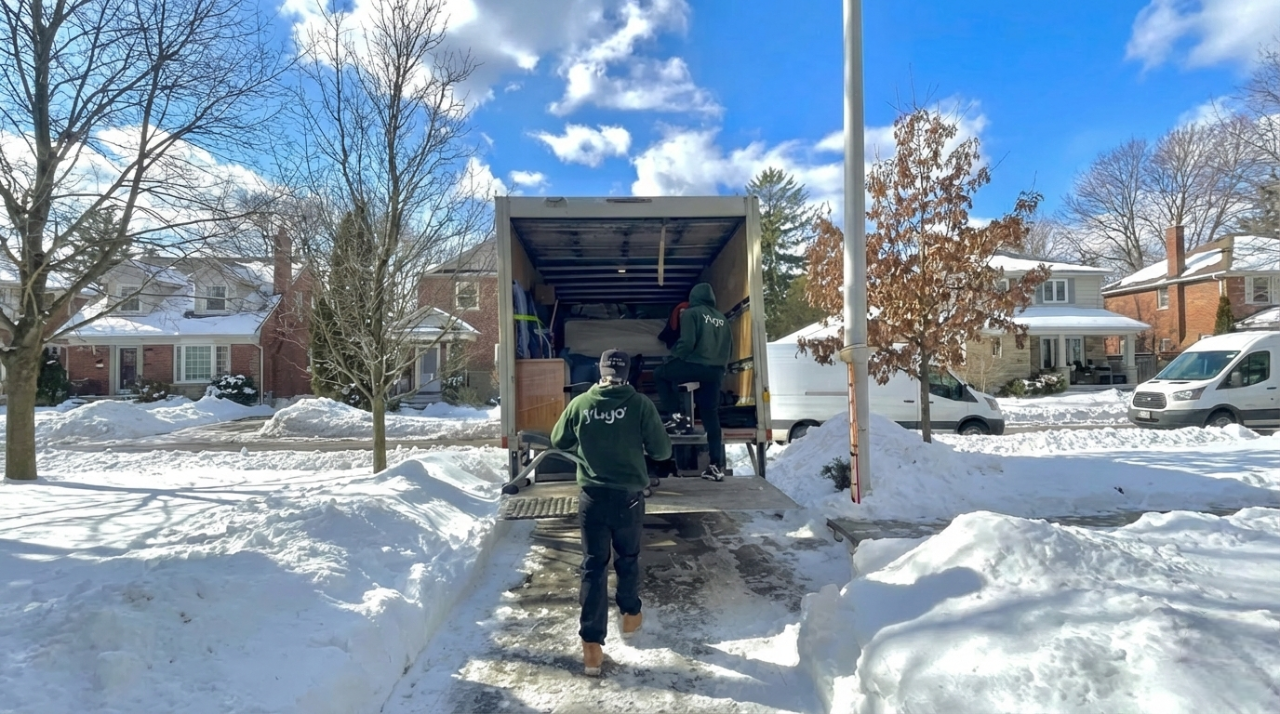
Yugo Moving team unloading truck during a winter move.
Quick Answer: Winter moves in Toronto cost $2,000-6,000 (15-25% less than summer rates). Key challenges: snow removal, floor protection from salt, shorter daylight (4:30pm darkness), temperature-sensitive items (electronics, plants, wood). Best months: October-November or February-March (avoid December holidays and January deep freeze).
Professional movers handle floor protection, climate control, and weather contingencies. DIY winter moves risk slips, damaged floors, frozen belongings, and temperature shock to electronics.
Why Move in Winter? The Advantages
Cost savings: 15-25% lower rates than peak season (May-September)
Better availability: Book movers 3-4 weeks ahead vs. 8-10 weeks in summer
Faster closing: Less competition for moving dates and services
Flexible scheduling: Movers more accommodating with timing changes
The tradeoff: Cold, snow, ice, shorter days, temperature-sensitive logistics
Who should move in winter:
Budget-conscious movers saving $500-2,000
Flexible schedules (can work around weather)
Smaller moves (condos, 1-2 bedrooms)
People comfortable with cold and planning extra precautions
Who should avoid winter moves:
Large estate moves (too many weather variables)
Moving with young children or elderly family members
People with extensive plant collections
Tight timelines that can't accommodate weather delays
Winter Moving Costs in Toronto (2026)
Standard Rates (November-March)
1-bedroom condo: $1,500-2,500 (vs. $2,000-3,200 summer)
2-bedroom home: $2,500-4,000 (vs. $3,200-5,000 summer)
3-bedroom home: $3,500-6,000 (vs. $4,500-7,500 summer)
Estate (5,000+ sq ft): $8,000-15,000 (vs. $10,000-20,000 summer)
Additional winter costs:
Extra floor protection: $100-200
Climate-controlled truck upgrade: $150-300
Snow removal service: $100-150
Emergency weather delay (if needed): $200-500 rescheduling
Months with best rates:
Cheapest: January-February (coldest, lowest demand)
Moderate: November, March (shoulder months)
Avoid: December (holiday premium), April (spring rush begins)
Toronto Winter Moving Challenges
Snow and Ice
Average snowfall November-March: 100-130 cm total
Peak snow months: January (30-40 cm), February (25-35 cm)
Ice storms: December-January most common
Impact on moves:
Driveways need clearing before movers arrive
Salt damages hardwood, tile, carpet if unprotected
Slippery conditions slow loading (adds 1-2 hours)
Trucks may not fit on unplowed streets
Solutions:
Hire snow removal service day before move ($100-150)
Salt pathways 24 hours ahead
Professional floor protection (runners, Masonite boards)
Confirm truck access with movers during site visit
Extreme Cold
Average temperatures:
November: 2°C to 7°C
December: -3°C to -10°C
January: -17°C to -20°C (coldest)
February: -15°C to -20°C
March: -10°C to 4°C
Extreme cold days (below -15°C): 10-20 days per winter, mostly January-February
Impact on moves:
Electronics risk condensation damage
Plants freeze in unheated trucks
Wood furniture contracts (minor risk for local moves)
Movers need frequent warm-up breaks (adds time)
Truck engines must stay running (idling bylaws in some areas)
Short Daylight Hours
Sunset times Toronto winter:
November: 4:50pm
December: 4:30pm (shortest days)
January: 5:00pm
February: 5:40pm
March: 6:20pm (improving)
Impact on moves:
Most moves must start 7-8am to finish before dark
Evening portions require additional lighting
Unsafe working conditions after dark on icy driveways
Rush hour traffic if moving extends past 4pm
Preparing for Your Winter Move: Week-by-Week
4 Weeks Before Move
Book professional movers:
Shorter lead time than summer (3-4 weeks vs. 8 weeks)
Ask specifically: "What's your winter weather protocol?"
Confirm they provide floor protection (runners, Masonite)
Verify climate-controlled trucks available
Assess property access:
Driveway width (can trucks navigate with snow banks?)
Street plowing schedule (city vs. private street)
Parking restrictions during winter (some Toronto streets ban parking during snow removal)
Building elevator booking (condos still require 2-3 week notice)
Toronto neighborhoods with difficult winter access:
The Annex, Cabbagetown: Narrow streets, challenging when snow-banked
Rosedale, Forest Hill: Long driveways, heavy snow accumulation
Beaches: Limited street parking when snow piled
Scarborough hills: Steep grades dangerous when icy
2 Weeks Before Move
Order winter-appropriate packing materials:
Plastic bins (not cardboard—gets soggy): $200-400 for 3-bedroom home
Heavy-duty tape (cold-resistant)
Bubble wrap and foam (extra insulation)
Waterproof covers for mattresses
Where to buy in Toronto:
U-Haul (multiple locations: Eglinton, Steeles, Scarborough)
Home Depot (winterized moving supplies section October-March)
Canadian Tire (plastic storage bins)
Schedule services:
Snow removal for move day (book now: $100-150)
Post-move cleaning with salt removal ($200-350)
Utility transfers (hydro, gas—confirm no weather delays)
Prepare temperature-sensitive items:
Turn off electronics 24 hours before move
Move houseplants to your vehicle (not moving truck)
Wrap wood furniture in moving blankets (thermal insulation)
1 Week Before Move
Weather monitoring:
Check 7-day forecast daily
Have backup date available if blizzard predicted
Confirm mover's weather policy (cancellation, rescheduling fees)
Property preparation:
Clear snow from driveway, walkways, entry
Salt all pathways (do this 24 hours ahead, not morning of)
Test outdoor lighting (moves may extend past sunset)
Create indoor warm space for movers (heat one room to 22-24°C)
Pack winter essentials box:
Extra gloves, hats, scarves
Towels (dry wet items)
Hot beverages (thermos of coffee/tea)
Phone chargers
First aid kit
Bag of salt (emergency pathway treatment)
Flashlights with batteries
Day Before Move
Final weather check:
Blizzard warning? Contact mover immediately to reschedule
Snow expected? Arrange early morning clearing
Extreme cold (-20°C+)? Confirm movers still operating
Final property prep:
Clear all snow and ice from pathways
Set heat to 18-20°C (helps items adjust to temperature)
Stage items in warm, dry area (not garage or unheated basement)
Park personal vehicles off-street (truck access priority)
Moving Day: Winter-Specific Protocols
Morning (7-8am Start Recommended)
Before movers arrive:
Do final pathway sweep (snow may have fallen overnight)
Turn on all lights (indoor and outdoor)
Heat main room to 22-24°C for mover breaks
Clear snow from where truck will park
When movers arrive:
Confirm they have floor protection (runners, Masonite, boot covers)
Show them heated room for breaks
Point out any icy or slippery areas
Verify they have cold-weather moving equipment
During the Move
Floor protection:
Professional movers lay heavy-duty runners from door to truck
Masonite boards over carpets and hardwood
Boot covers in finished areas
Absorbent mats at entry points
What this costs: Included with professional movers, or $100-200 extra for premium materials
Handling temperature-sensitive items:
Electronics load last, unload first (minimize cold exposure)
Plants stay in your heated vehicle
Artwork wrapped in blankets, loaded in climate-controlled truck section
Wine collections require climate control (55°F maintained)
Managing cold:
Movers take 10-minute warm-up breaks every 60-90 minutes
This adds 30-60 minutes to total move time
Keep hot beverages available
Don't rush movers in extreme cold (safety priority)
Arriving at New Home
Immediate actions:
Clear snow from new property entry before truck arrives
Turn heat to 20°C before moving items inside
Lay floor protection immediately
Stage warm area for unpacking breaks
Unloading priority:
Temperature-sensitive items first (electronics, plants, artwork)
Bedroom furniture (need to sleep that night)
Kitchen essentials
Everything else
Allow temperature adjustment:
Electronics: 2-4 hours to reach room temperature before powering on
Plants: Keep in warmest room, water lightly
Wood furniture: Allow 24 hours to adjust before moving to final position
Protecting Your Belongings from Winter Damage
Electronics (TVs, Computers, Gaming Systems)
Risk: Condensation from temperature shock causes internal damage
Protection:
Turn off 24 hours before move
Wrap in moving blankets (thermal insulation)
Keep in climate-controlled truck section
Wait 2-4 hours after delivery before powering on
Cost of damage if not protected: $500-3,000 for TV/computer replacement
Houseplants
Risk: Freezing temperatures kill most houseplants in minutes
Protection:
Transport in your heated vehicle (back seat, not trunk)
If too many plants, professional movers pack them last, unload first
Use blankets and newspaper for insulation
Expect some leaf drop (stress response, usually recovers)
Plants that won't survive truck transport:
Tropical plants (orchids, ferns, palms)
Succulents (freeze easily despite drought tolerance)
Large plants (fiddle leaf fig, monstera)
Solution: Ask friend to transport them, or accept some may not survive
Wood Furniture
Risk: Cold makes wood contract, warm indoor air makes it expand (minor cracking risk)
Protection:
Wrap in thick moving blankets
Don't place near heating vents immediately after move
Allow 24-48 hours to adjust to new home temperature
Local moves (under 3 hours) pose minimal risk
Most vulnerable: Antiques, solid wood (not veneer), musical instruments
Wine Collections
Risk: Temperature fluctuation ruins wine, freezing shatters bottles
Protection:
Climate-controlled transport mandatory (maintain 55°F)
Wrap bottles in bubble wrap and packing paper
Use wine-specific boxes with dividers
Pack tightly so bottles don't shift
Professional wine moving: $200-500 for collections under 100 bottles
Toronto Neighborhoods: Winter Moving Difficulty
Easy Winter Access
Best for winter moves:
Downtown condos (King West, Liberty Village, CityPlace): Buildings handle snow removal, elevator access
Newer suburbs (Vaughan, Markham, Mississauga): Wide streets, modern snow removal
Etobicoke (Humber Valley, Kingsway): Good access, reliable plowing
Moderate Difficulty
Manageable with planning:
Midtown (Yonge & Eglinton, Davisville): Good infrastructure, narrow side streets
North York (Willowdale, Bayview Village): Hills can be icy, but major routes cleared
East York: Mixed—main roads fine, residential streets slower to plow
Challenging Winter Access
Require extra planning:
The Annex, Cabbagetown, Leslieville: Narrow Victorian-era streets, heavy snow banks
Rosedale, Forest Hill: Long driveways, mature trees drop snow, private snow removal
The Beaches: Limited parking when snow-banked, distance from highway in storms
Scarborough (Highland Creek, Rouge): Hills dangerous when icy, slower emergency clearing
Winter Moving Costs: Budget Breakdown
Standard 3-Bedroom Home Move (Toronto to Toronto)
Base move: $3,500-5,000
Winter discount: -$500 to -$1,000 (15-20% off)
Professional packing: $1,200-1,800
Floor protection upgrade: $150-200
Climate-controlled truck: $200-300
Snow removal (both properties): $200-300
Post-move cleaning: $250-350
Total winter move: $5,000-7,500 (vs. $6,500-9,500 summer)
Savings: $1,500-2,000
Add-ons Worth the Cost in Winter
Climate-controlled truck: $200-300 (essential for art, electronics, plants, wine)
Premium floor protection: $150-200 (prevents $1,000+ in floor damage)
Professional packing: $1,200-1,800 (waterproof bins, proper wrapping)
Insurance upgrade: $100-200 (Full Value Protection vs. basic)
Not worth it: Same-day unpacking: Movers fatigued from cold, better to do next day
Storage (if avoidable): Heated storage costs 30% more in winter
When to Reschedule: Weather Thresholds
Proceed with move:
Light snow (under 5cm)
Cold but clear (down to -15°C)
Light freezing rain if pathways pre-salted
Consider rescheduling:
Moderate snow (5-15cm) on move day
Extreme cold (-20°C to -25°C)
Freezing rain with ice buildup
Definitely reschedule:
Heavy snow (15cm+) or blizzard warning
Extreme cold below -25°C
Ice storm with power outages
City declares snow emergency
Rescheduling costs:
Professional movers: $0-300 depending on notice
Last-minute (under 24 hours): $200-500
Weather emergency: Usually waived
FAQ: Winter Moving in Toronto
-
Yes, 15-25% cheaper. Standard 3-bedroom move: $3,500-5,000 winter vs. $4,500-6,500 summer. Best rates January-February (coldest months, lowest demand).
-
Below -20°C, most movers will suggest rescheduling for safety. Between -15°C to -20°C, moves proceed but take 20-30% longer with warm-up breaks.
-
Professional movers use heavy-duty non-slip runners and Masonite boards creating waterproof barriers from truck to home. DIY: Buy runners at Home Depot ($50-100).
-
Small plants: transport in your heated vehicle. Large plants: professional movers pack last, unload first, wrap in blankets. Success rate 70-80% for hardy plants, 30-50% for tropicals.
-
Standard trucks don't. Climate-controlled trucks maintain 50-65°F (costs $200-300 extra). Essential for wine, art, electronics, antiques.
-
Professional movers contact you to reschedule. Most waive rescheduling fees for weather emergencies. Have backup date ready when booking winter moves.
-
Yes. Use plastic bins (not cardboard—gets soggy), extra bubble wrap for fragile items, blankets for furniture insulation, waterproof mattress covers.
-
Winter moves take 20-30% longer due to: shorter daylight, cold weather breaks, careful navigation on ice, floor protection setup. Plan extra 2-3 hours.
-
Yes, mandatory. Clear driveway, walkways, truck parking area, entry points. Salt all pathways 24 hours ahead. Movers can refuse to work on unsafe icy surfaces.
-
Yes, light to moderate snow (under 10cm). Heavy snow or blizzard conditions lead to rescheduling. Movers assess safety on arrival—if too dangerous, they'll postpone.
The Bottom Line
Winter moving in Toronto saves money (15-25% off) and offers better availability, but requires extra planning for snow, ice, and cold. Professional movers handle floor protection, weather contingencies, and temperature-sensitive items.
Keys to successful winter move:
Book 3-4 weeks ahead
Clear all snow and ice before movers arrive
Use plastic bins, not cardboard
Transport plants yourself
Allow electronics to adjust to room temperature
Have backup date for extreme weather
Best winter moving months: February-March (shorter winter, spring approaching) or October-November (before deep freeze).
Ready for Your Winter Move?
Yugo specializes in Toronto winter moves. Floor protection systems, climate-controlled trucks, weather contingency planning, experienced crews who work safely in cold conditions.
Winter move savings: $500-2,000 vs. summer rates. Book 3-4 weeks ahead.
Contact Yugo at helloyugo.com
Yugo is a Toronto-based moving company specializing in premium residential relocations year-round. For winter moves requiring safety protocols and weather expertise, visit helloyugo.com
