
How to Pack Fragile Items for Moving in Toronto: Complete Guide
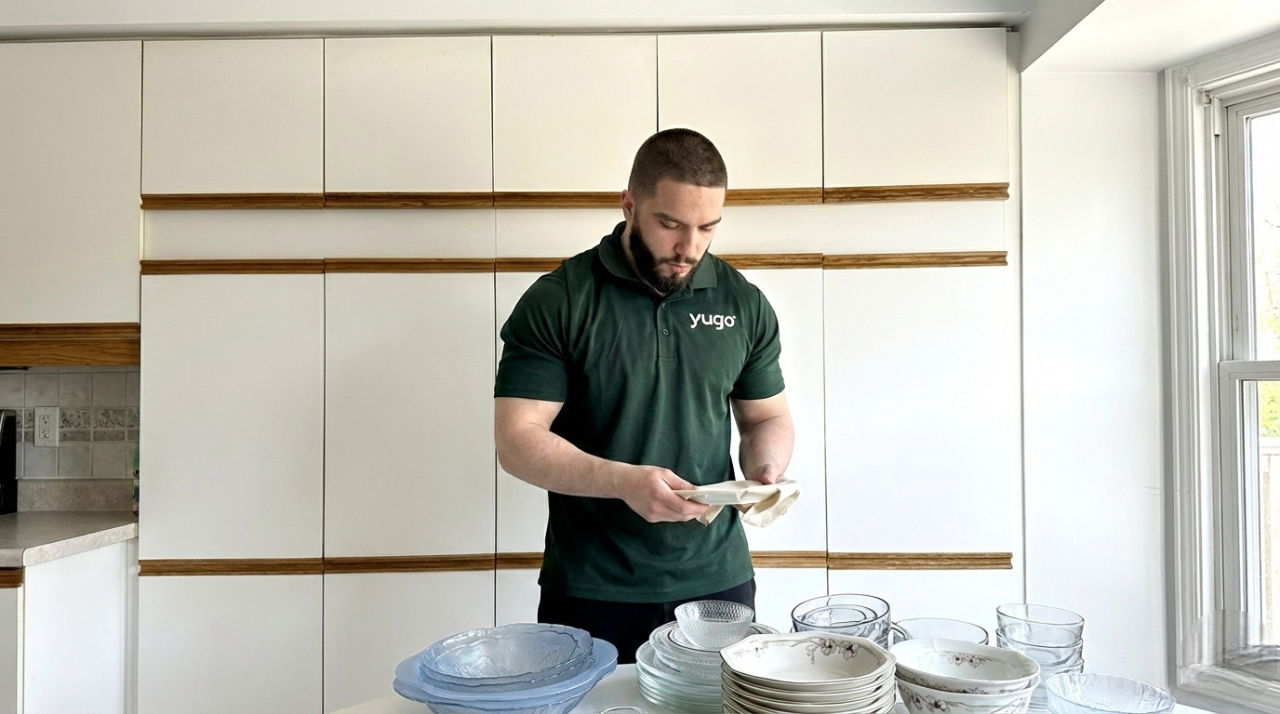
Breaking a wine glass during a move is annoying. Breaking a crystal decanter from your grandmother is devastating. That’s why packing fragile items correctly matters far more than most people expect.
This guide explains how to pack fragile items for moving in Toronto, using the same methods professional packers follow. If you are packing valuables yourself or comparing movers in Toronto that offer professional packing, understanding the right materials, timing, and techniques is the difference between arriving intact and filing a damage claim.
Quick Answer: Professional packers use dish boxes, packing paper, bubble wrap, and cell dividers to prevent movement and box collapse. Each item is wrapped individually, voids are filled, and boxes are labeled clearly. For high-value items like art, antiques, or wine, professional packing typically costs $800–2,000 and dramatically reduces risk.
Most damage does not happen from rough handling. It happens when fragile items shift inside boxes or when boxes fail under weight. Correct materials and technique matter more than being careful.
When to Pack Yourself vs. Hire Professionals
Pack yourself if:
Standard glassware, dishes, decorative items
Items under $500 total value
You have 3-4 weeks to pack carefully
Boxes will be loaded by professional movers
Hire professional packers if:
Art, antiques, wine collections, fine china
Items valued over $5,000
Limited time before move date
Moving from Bridle Path, Rosedale, or Forest Hill estates with valuable collections
Professional packing in Toronto costs: $800-2,000 for full-home packing, depending on home size and collection value. High-value item packing (art, wine, antiques) costs $150-300 per specialized crate.
Packing Fragile Items vs Packing Valuables Safely
Not all fragile items carry the same level of risk. Packing fragile items like everyday glassware focuses on preventing breakage, while packing valuables safely adds accountability, documentation, and insurance considerations.
Key differences:
Fragile items under $500 can often be packed safely with proper materials
Valuables over $5,000 require documentation and controlled handling
Insurance claims are far easier when professional packing is used
This is why residential moving companies strongly recommend professional packing for art, antiques, wine collections, and heirloom pieces. The packing process becomes part of risk management, not just preparation.
Essential Packing Materials (Where to Buy in Toronto)
What You Need
Boxes (never use old grocery boxes):
Dish boxes with cell dividers (for glassware)
Medium boxes (books, small items)
Mirror boxes (artwork, mirrors)
Wardrobe boxes (hanging clothes)
Cushioning materials:
Packing paper (white, unprinted—newspaper ink transfers)
Bubble wrap (large bubbles for fragile items)
Foam sheets (for surfaces that scratch easily)
Packing peanuts (fill voids, not primary protection)
Where to buy in Toronto:
U-Haul locations (Eglinton, Yonge & Steeles, Scarborough)
Home Depot (multiple GTA locations)
Uline Canada (online, bulk orders)
Costco (bulk packing supplies)
Cost: $200-400 for complete packing materials for a 3-bedroom home.
How to Pack Fragile Items: Step-by-Step
Glassware and Wine Glasses
Materials: Dish box with cell dividers, packing paper, bubble wrap
Steps:
Line dish box bottom with 3-4 inches crumpled packing paper
Wrap each glass individually: stuff paper inside glass, wrap exterior
Place glasses vertically in cells (never horizontally—stems break)
Fill voids between glasses with packing paper
Add 3-inch paper layer on top before sealing
Label: "FRAGILE - GLASSWARE - KITCHEN" on all sides
Common mistake: Wrapping glasses together. Each one needs individual wrapping.
Dishes and China
Materials: Dish box, packing paper, bubble wrap for valuable pieces
Steps:
Wrap each plate individually with 2-3 sheets packing paper
Stack plates vertically on edge (like records), never flat
Place heaviest items (serving platters) at bottom
Lighter items (bowls, saucers) on top
Fill all voids—dishes shift and break when boxes have empty space
Maximum 30-40 lbs per box (any heavier and bottom collapses)
Why vertical stacking: Plates on edge distribute weight better and resist breaking more than flat stacks.
Artwork and Framed Pieces
Materials: Mirror boxes, foam corner protectors, bubble wrap, packing tape
Steps:
Remove hanging wire (it can puncture wrapping)
Apply foam corner protectors to frame corners
Wrap entire piece in bubble wrap (bubble side facing away from glass)
Tape wrap securely but don't tape directly on frame
Place in mirror box with cardboard between multiple pieces
Mark: "FRAGILE - GLASS - THIS SIDE UP"
For valuable art (over $5,000): Use professional crating. Custom wooden crates with foam inserts protect against vibration and impact. Toronto art handlers charge $150-400 per crate depending on size.
Wine and Liquor Bottles
Materials: Wine shipping boxes with dividers, bubble wrap, packing paper
Steps:
Wrap each bottle individually in bubble wrap
Secure wrap with tape at neck and base
Place bottles vertically (never on side—corks can shift)
Use cell dividers or cardboard between bottles
Fill voids tightly—bottles shouldn't touch or move
Label: "FRAGILE - LIQUIDS - KEEP UPRIGHT"
For wine collections: Professional wine movers use climate-controlled transport and specialized packing ($200-500 for collections under 100 bottles). Temperature fluctuations during transport can damage wine even if bottles don't break.
Lamps and Lighting Fixtures
Materials: Original boxes if available, otherwise medium boxes, bubble wrap, packing paper
Steps:
Remove lightbulbs (pack separately)
Remove shades (pack in separate boxes)
Wrap base and stem separately
Use original box when possible
If no original box, use appropriately sized box with 3-inch cushioning on all sides
Chandeliers: Hire professionals. Disassembly, wrapping, reassembly requires expertise. Damage rate for DIY chandelier moving exceeds 40%.
Mirrors and Glass Tabletops
Materials: Mirror boxes, foam protectors, bubble wrap, blankets
Steps:
Apply foam corner protectors
Cover entire surface with bubble wrap
Add layer of blanket for large pieces
Place in mirror box or create custom cardboard wrap
Mark both sides: "FRAGILE - GLASS - DO NOT LAY FLAT"
Alternative: Professional movers use custom crates for large mirrors and glass. Cost: $150-300 per piece. Worth it for irreplaceable items.
Antiques and Heirlooms
Materials: Varies by item, but always include soft wrapping and sturdy boxes
Steps:
Photograph item from all angles before packing (insurance documentation)
Identify weak points: loose joints, delicate handles, fragile elements
Stabilize weak areas with soft wrapping before full wrap
Use appropriately sized box (not too large—creates shifting risk)
Fill all voids completely
Consider professional assessment for items over $10,000
Antique furniture: Often better moved unwrapped with professional padding and strapping. Boxes aren't always the answer.
What Professional Packers Do Differently
Material quality: Professional-grade materials are thicker, stronger, and don't degrade under pressure. Commercial bubble wrap is 2-3x thicker than retail versions.
Custom crating: For art, antiques, and high-value items, professionals build wooden crates with foam inserts cut to exact dimensions. The item doesn't move at all during transport.
Inventory documentation: Every item packed is photographed and logged. If something breaks, there's clear documentation of pre-move conditions.
Climate control awareness: Professionals pack temperature-sensitive items (wine, art) last and unpack first. They use climate-controlled trucks for Toronto moves year-round.
Strategic packing order: Fragile items go in specific sections of the truck to minimize shifting and vibration exposure.
How White Glove Moving Services Handle Fragile Items
White glove moving is not just a premium label. It refers to a defined process for handling fragile and high-value items with minimal variability.
In a white glove moving service, packers:
Assess each item before packing
Use non-reactive materials for sensitive surfaces
Document condition before wrapping
Control packing order to limit handling
This approach is standard for luxury homes and estates, where fragile items are often irreplaceable. Many white glove moving services also include custom crating, climate-controlled transport, and full unpacking to reduce post-move handling risk.
If your move includes art, antiques, or wine, choosing white glove moving shifts responsibility from improvisation to process.
Common Packing Mistakes That Cause Damage
Mistake 1: Using Newspaper Instead of Packing Paper
Problem: Newspaper ink transfers to dishes, china, glassware. Removal is difficult and sometimes permanent.
Solution: Use white, unprinted packing paper. Costs $20-30 for a roll sufficient for the entire kitchen.
Mistake 2: Leaving Voids in Boxes
Problem: Items shift during transport, crash into each other, break.
Solution: Fill every void with crumpled paper, bubble wrap, or packing peanuts. Shake the box gently, if you hear movement, add more cushioning.
Mistake 3: Overpacking Boxes
Problem: Boxes over 50 lbs collapse under stacking weight. Movers can't lift them safely, increasing drop risk.
Solution: Maximum 30-40 lbs for dish boxes, 40-50 lbs for other boxes. Use smaller boxes for heavy items.
Mistake 4: Wrapping Items Together
Problem: When one item shifts, it impacts others. Multiple items break instead of one.
Solution: Individual wrapping for every fragile item. Yes, it takes longer. Yes, it's worth it.
Mistake 5: Poor Box Labeling
Problem: Movers don't know which boxes need careful handling. Fragile boxes get stacked under heavy ones.
Solution: Label "FRAGILE" on all six sides. Add room destination and contents description.
Mistake 6: Packing Too Early
Problem: Items packed 4+ weeks ahead get repacked, shifted, or damaged before moving day.
Solution: Pack fragile items 1-2 weeks before move. Earlier if using professional storage.
Toronto-Specific Packing Considerations
High-rise condos (Yorkville, King West, Financial District):
Limited elevator time means rushed unpacking
Pre-label boxes by room AND priority
Fragile items should be marked for first unload
Narrow Toronto homes (Annex, Cabbagetown, Leslieville):
Tight stairwells and doorways increase handling frequency
Extra cushioning for items that will navigate multiple corners
Consider professional packing for homes with limited access
Estate moves (Bridle Path, Rosedale, Forest Hill):
High-value collections justify professional packing cost
Custom crating for artwork, antiques, wine
Climate-controlled transport essential for valuable items
Winter moves (November-March):
Cold makes some packing materials brittle
Temperature fluctuation between heated homes and cold trucks affects adhesives
Professionals use insulated padding for temperature-sensitive items
Why Movers in Toronto Recommend Professional Packing
Toronto moves introduce constraints that packing alone cannot solve. Condo elevators, narrow staircases, long carry distances, and seasonal weather all increase handling frequency.
This is why experienced movers in Toronto often recommend:
Professional packing for fragile items in high-rise condos
Extra cushioning for narrow Toronto homes
Climate-aware packing during winter moves
Most residential moving companies see damage occur not during transport, but during rushed packing or repeated handling. Professional packing reduces both.
When to Hire Professional Packers in Toronto
Situations where professional packing pays for itself:
Collections valued over $10,000: Art, antiques, wine, collectibles
Time constraints: Move date in under 3 weeks
Full household moves: 3+ bedrooms with complete kitchens
Elderly or mobility-limited homeowners: Physical demands of packing are significant
Corporate relocations: Company-paid moves often include professional packing
Insurance requirements: High-value item insurance may require professional packing
Toronto professional packing costs:
Full kitchen packing: $400-600
Entire 3-bedroom home: $1,200-2,000
High-value item specialty packing: $150-400 per crate
Complete estate packing: $3,000-6,000
Return on investment: Professional packing eliminates damage claims, saves 20-40 hours of labor, and qualifies for better insurance coverage.
How to Choose Professional Packers in Toronto
Questions to ask:
"Do you use cell dividers for dishes and glassware?" (Yes = proper materials)
"What's your damage claim rate for fragile items?" (Under 1% is professional standard)
"Do you provide inventory documentation?" (Essential for insurance)
"Are packers trained or general labor?" (Training matters for technique)
"What materials do you use for artwork and antiques?" (Should mention custom crating)
Red flags:
Won't provide packing-specific insurance coverage
Can't explain packing methodology
No references for similar packing jobs
Significantly cheaper than market rate (cutting corners on materials or training)
Packing Timeline
3-4 weeks before move:
Order packing materials
Start with non-essential items (books, decor, off-season items)
2-3 weeks before move:
Pack majority of home
Leave out essentials only
1 week before move:
Pack fragile items (closer to move date = less time for damage before transport)
Final kitchen and bathroom items
Day before move:
Last essentials
Label all boxes
Create priority box inventory for movers
Professional packers: Arrive 1-3 days before move date, pack everything except daily essentials.
Insurance and Documentation
Before packing:
Photograph valuable items from multiple angles
Get professional appraisals for items over $5,000
Review homeowner's insurance coverage for items in transit
During packing:
Document box contents on inventory sheet
Note condition of fragile items before wrapping
Keep high-value item documentation separate from packed boxes
After unpacking:
Inspect items immediately
Document damage with photos before moving crew leaves
File claims within 24-48 hours
Toronto moving insurance:
Basic coverage: $0.60 per pound (inadequate for valuables)
Full Value Protection: Replacement cost or repair (recommended for fragile items)
Third-party insurance: Available for collections over $50,000
The Bottom Line
Packing fragile items properly requires the right materials, correct technique, and enough time to do it carefully. Most damage happens from poor box selection, insufficient cushioning, or items shifting during transport.
For standard household items, DIY packing with proper materials works. For valuable collections, art, antiques, or wine, professional packing eliminates risk and often costs less than replacing one broken item.
The choice is simple: invest time and care in packing, or invest money in professional expertise.
Ready to Pack Your Toronto Move?
Yugo offers professional packing services for fragile items, high-value collections, and complete home packing. Custom crating, climate-controlled transport, Full Value Protection insurance.
Professional packing costs $800-2,000 for most Toronto homes. Significantly less than replacing broken heirlooms.
Contact Yugo at helloyugo.com
Yugo is a Toronto-based moving company specializing in premium residential relocations. For packing services that protect valuables, visit helloyugo.com
FAQ: Packing Fragile Items
-
No. Newspaper ink transfers to surfaces and is difficult to remove. Use white packing paper instead. Costs $20-30 for sufficient quantity.
-
For a 3-bedroom home with average glassware: 200-300 feet. Buy a 400-foot roll ($40-60) to ensure you don't run short.
-
Depends. Beds, tables with removable legs—yes. Antique furniture with original joints—hire professionals to assess first.
-
Small to medium boxes (1.5-3.0 cubic feet). Never pack fragile items in large boxes, the risk of being overweight and collapse is too high.
-
Corner protectors, bubble wrap (bubbles facing out), mirror box or custom cardboard, label both sides "FRAGILE - GLASS," transport vertically never flat.
-
Full-service packing includes everything except personal documents, medications, jewelry, and items you're transporting yourself.
-
Small apartment: 4-6 hours. 3-bedroom house: 1-2 days. Estate with collections: 3-5 days.
-
Document immediately with photos. File a claim with the moving company within 24-48 hours. Full Value Protection covers repair or replacement.
